


TENEVENTS.
One Athlete. Zero Compromises.
THE
CALL
Before you lace the spikes, we need to know where the chalk dust is thickest. Three diagnostic tools that reveal your complete athlete profile.

Ten-Event Weakness Audit
Where your points are bleeding
Submit marks from your last full decathlon or individual event bests. Our coaches run the IAAF scoring algorithm against your profile and flag the two to three events where targeted improvement yields maximum points gain — because the throws score almost neutrally while the sprints score progressively.
PR Baseline Profile
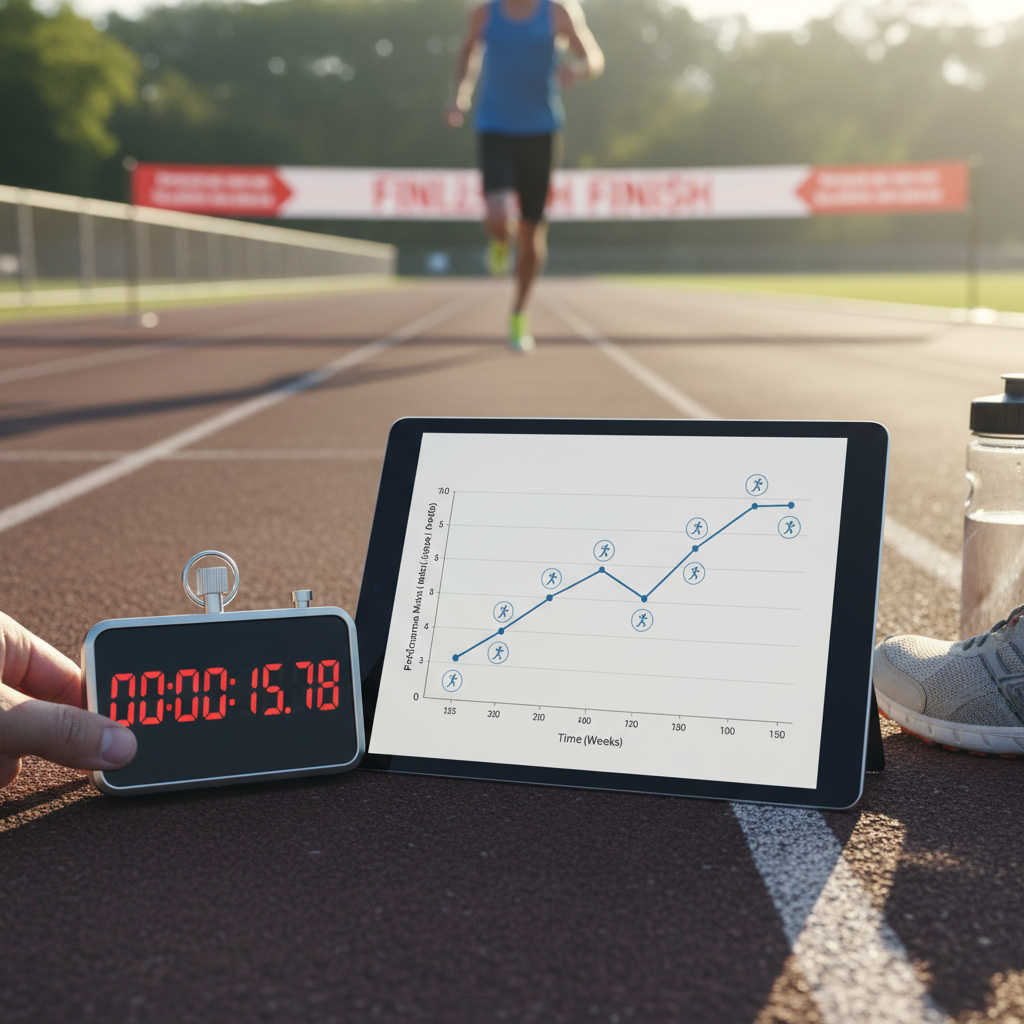
Your current score ceiling
We convert every individual PR into decathlon points and build a ceiling chart. See exactly where you are versus the Olympic Trials standard (8,460 pts) and the Trials qualifier field (Heath Baldwin ran 8,625 in Eugene).

Two-Day Periodization Map
Train the full schedule, not fragments
Most coaches run out of expertise after event four. We build a full periodization block structured around the actual two-day meet schedule — Day 1 (100m, LJ, SP, HJ, 400m) into Day 2 (110H, DT, PV, JT, 1500m) — so your body learns the fatigue curve, not just the individual events.
THE
TRIALS
Ten events. Ten coaching modules. Build your program event by event, or take all ten and enter as a complete athlete.

The 100m sets your psychological tempo for the entire meet. We coach reaction time, drive phase mechanics, and the specific deceleration management that preserves your legs for the 400m six hours later.
"Every tenth of a second in the 100m is worth ~84 points. We chase tenths, not hundredths."
- Block clearance angle
- Drive phase stride length
- Meet-day fatigue management
- Wind-legal execution
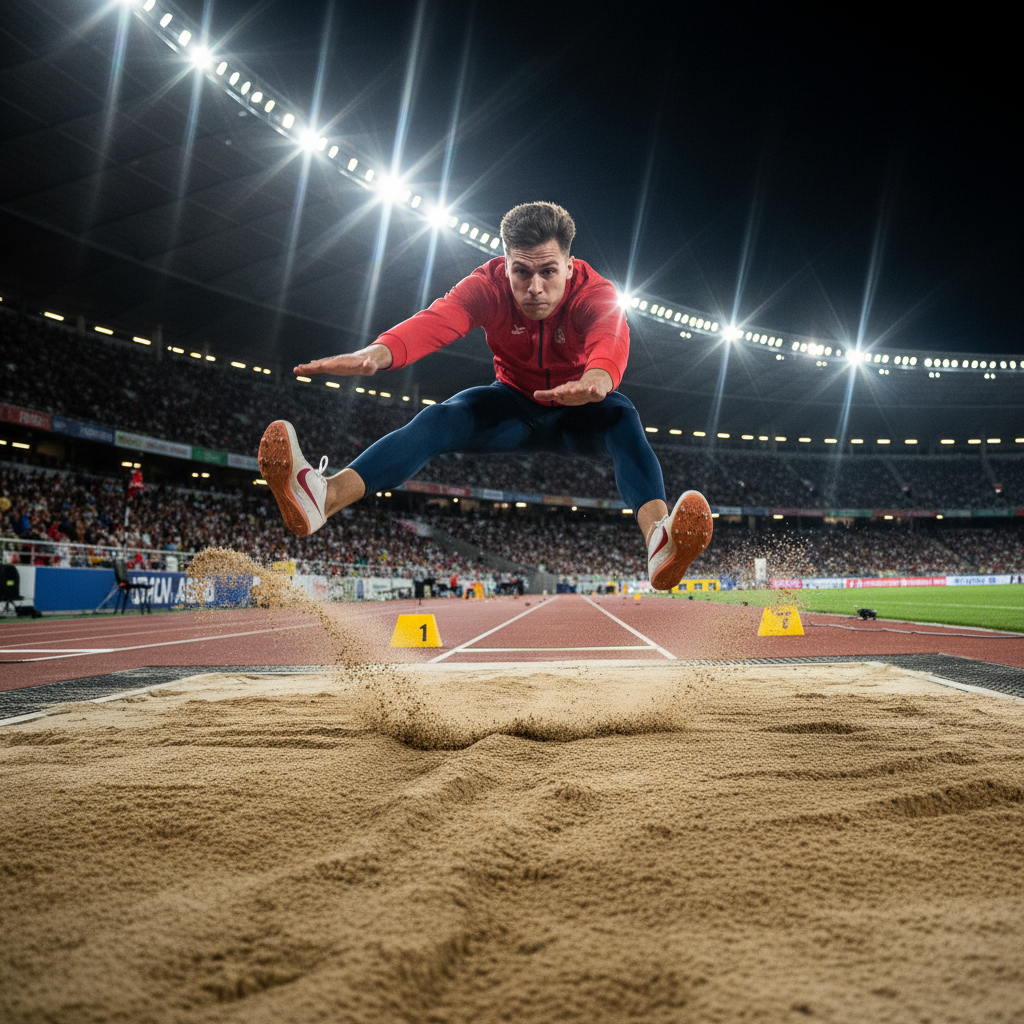
The long jump is where sprinter-jumpers harvest massive points. We work the run-up consistency, penultimate step mechanics, and the specific takeoff technique that translates from training to the high-pressure meet environment.
"Consistency beats peak performance. A 7.30m every attempt scores more than 7.60m once."
- Run-up calibration
- Penultimate step lowering
- Takeoff board accuracy
- Flight position

Shot put is the most undertrained event in the combined events. The scoring table is nearly neutral above 12m, meaning raw strength gains yield diminishing returns — we focus on technique efficiency and optimal release angle.
"The IAAF throws tables are almost neutral. Smart technique beats brute force."
- Rotational vs glide technique selection
- Power position stability
- Release angle optimization
- Competition-day rhythm

High jump is a technical event that rewards flexibility, approach arc consistency, and bar clearance mechanics. After five events, your approach run speed is compromised — we train specifically for the fatigued high jump.
"Approach arc and penultimate step are 80% of the jump. We drill those until they are automatic."
- J-curve approach calibration
- Penultimate step explosion
- Bar clearance arch
- Fatigued-state consistency

The 400m is the cruelest event in the decathlon — run after four explosive efforts, it tests lactate tolerance, pace judgment, and psychological endurance. We train the specific 400m that follows a long jump, shot put, and high jump, not a fresh 400m.
"Pace through 200m to 250m. Every second under 48.0 is worth ~80 points."
- Fatigued-state pacing strategy
- Lactate threshold work
- 200m split discipline
- Day 2 recovery protocol
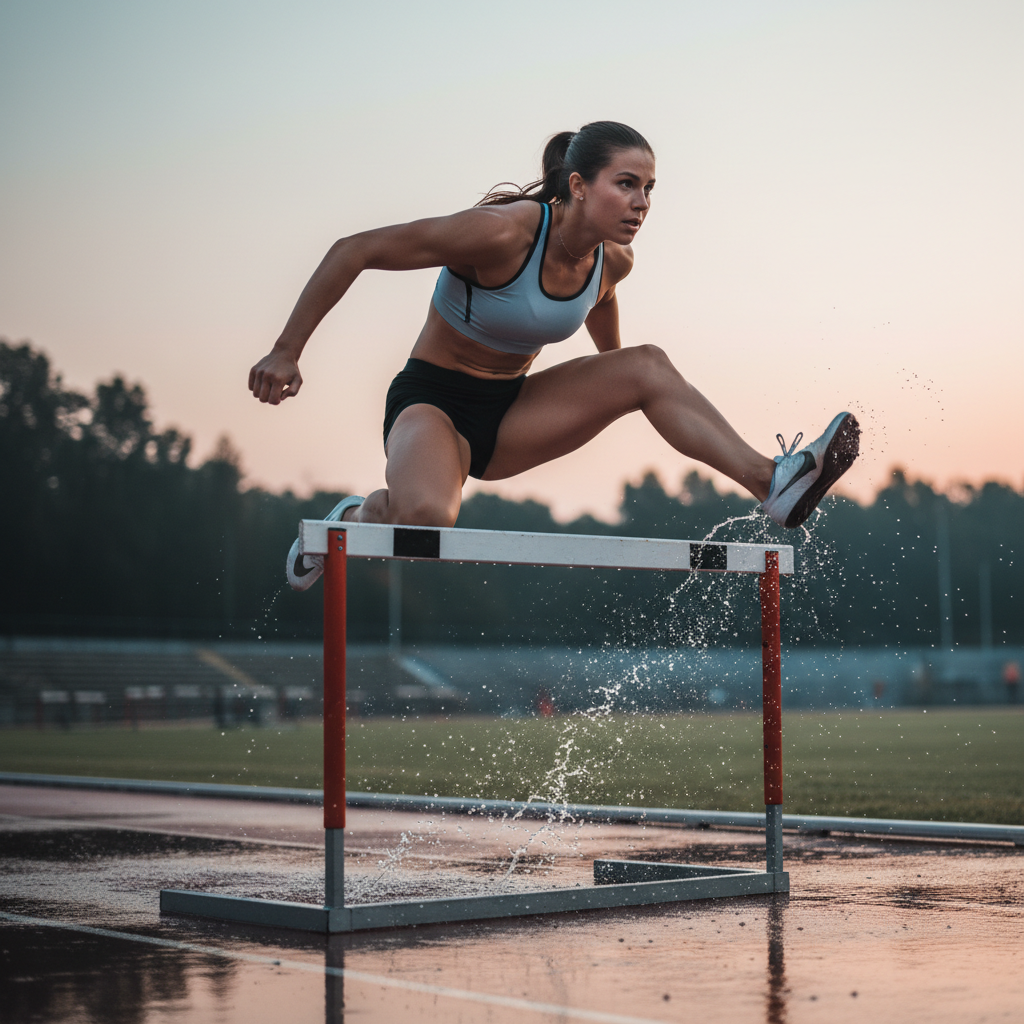
The 110m hurdles opens Day 2 when your legs remember yesterday. We coach the three-step rhythm, lead leg mechanics, and the psychological reset that turns overnight soreness into controlled aggression.
"Rhythm is everything. A clean 13.6 beats a stumbled 13.2 every time."
- Lead leg snap mechanics
- Three-step rhythm maintenance
- Trail leg clearance
- Overnight recovery protocol
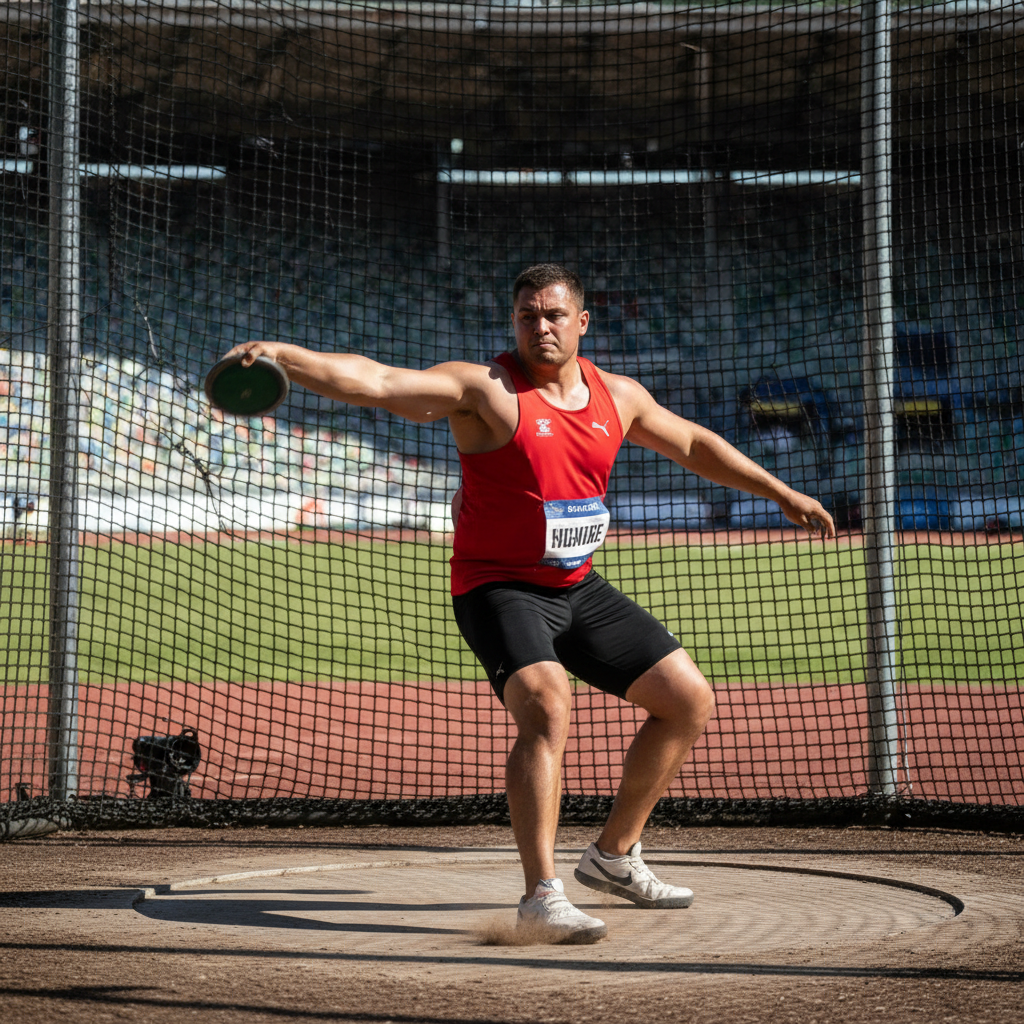
Discus gives tired athletes a moment to reset and collect points. We focus on rotational efficiency, release mechanics, and the specific mental state that turns a slow, deliberate spin into maximum distance under fatigue.
"Relaxation generates speed. Tension kills the discus throw."
- Rotational balance and timing
- Release angle (32-35°)
- Rim pressure and finger placement
- Wind reading
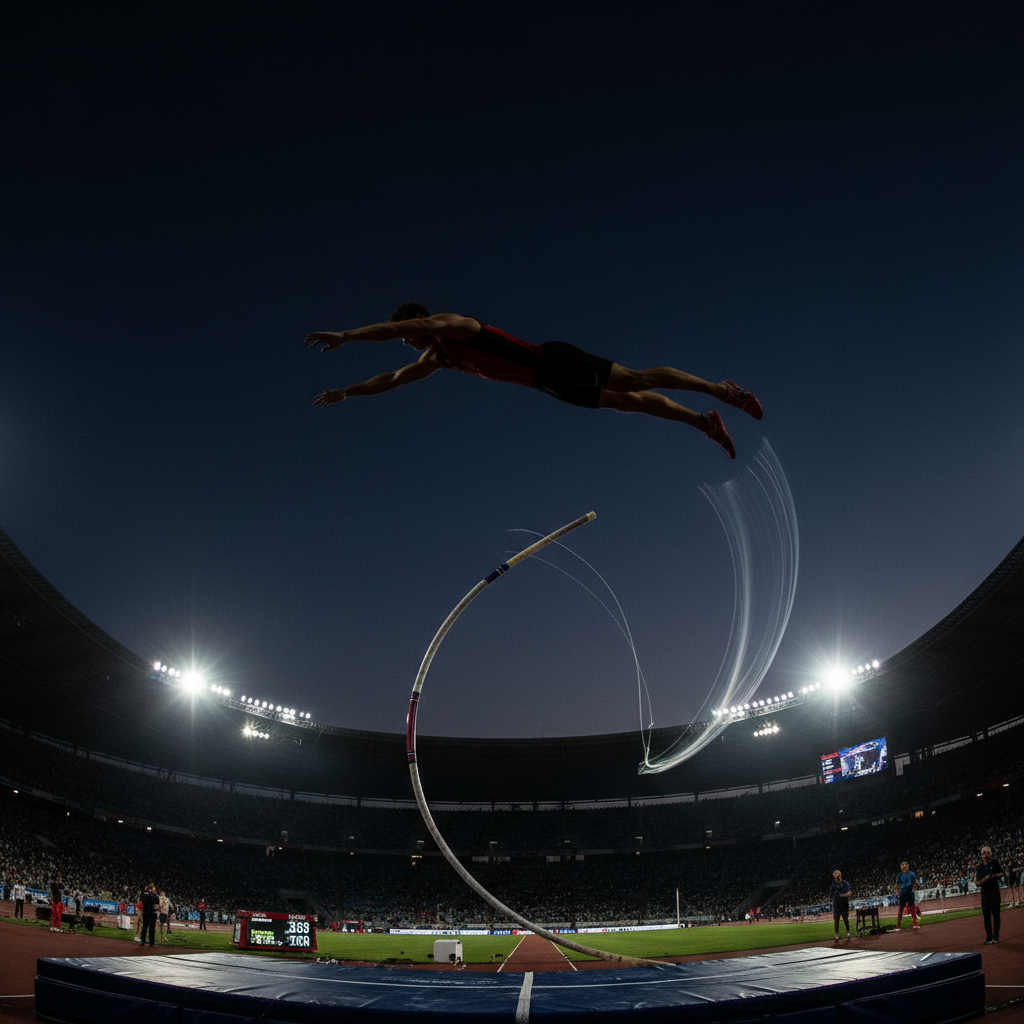
Pole vault is the most technically demanding event in the decathlon and the one where most combined-events coaches lose the plot. We provide dedicated vault coaching — grip height selection, plant mechanics, and the specific progression pathway from beginner to competitive heights.
"The vault is a sprint. Speed into the box is 70% of the jump."
- Pole selection and grip height
- Box plant mechanics
- Inversion timing
- Bar clearance body position
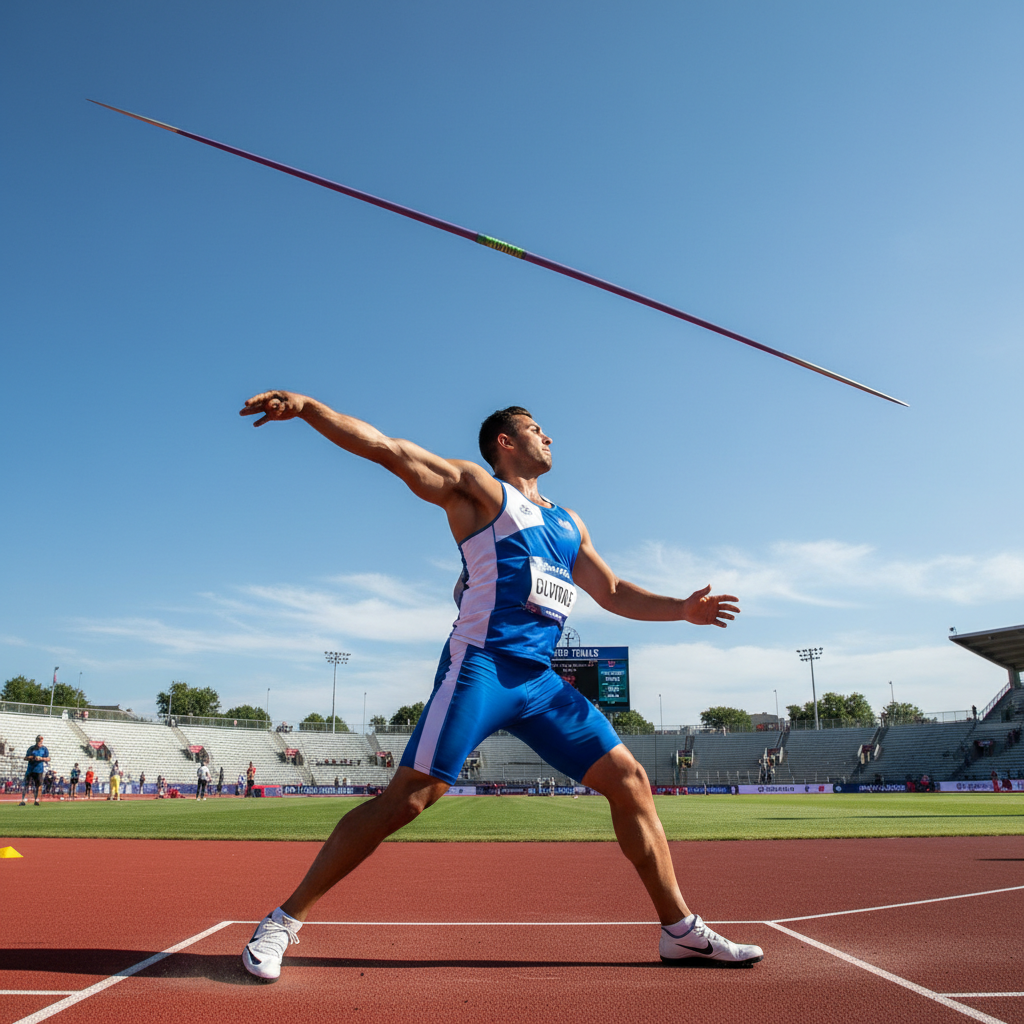
Javelin rewards technique over raw strength and tends to improve as athletes mature. We coach the full approach run, crossover mechanics, and release angle — the event where masters athletes often find their biggest relative gains.
"A 70m javelin from a 5-step approach beats a 65m from a full run when your legs are gone."
- Grip and carry position
- Crossover step mechanics
- Release angle (30-36°)
- Short-approach competition throw

The 1500m is the most undertrained event in the combined events — no decathlete wants to do distance work. But a 4:10 versus a 4:30 is the difference between making the standard and watching from the stands. We build the specific aerobic base that survives Day 2 fatigue.
"The 1500m is not lost on the track. It is lost in the weight room six months earlier."
- Aerobic base building
- Lactate threshold runs
- Race tactics from the gun
- Psychological endurance
THE
ABYSS
The moment every decathlete knows. Event seven, Day 2, legs gone, score spiraling. What happened next.

After the pole vault on Day 2, I was sitting in the infield at 7,800 points and I told my old college coach I was done. The 1500m felt like drowning in slow motion. He said "you're not tired, you're just scared." I ran 4:18 and qualified for the Trials.

My high school coach was great through the 400m. Then we hit hurdles and he was guessing. By the discus I was basically self-coaching. I lost 400 points in events five through seven that I should never have lost. Now I know what I'm doing in all ten.
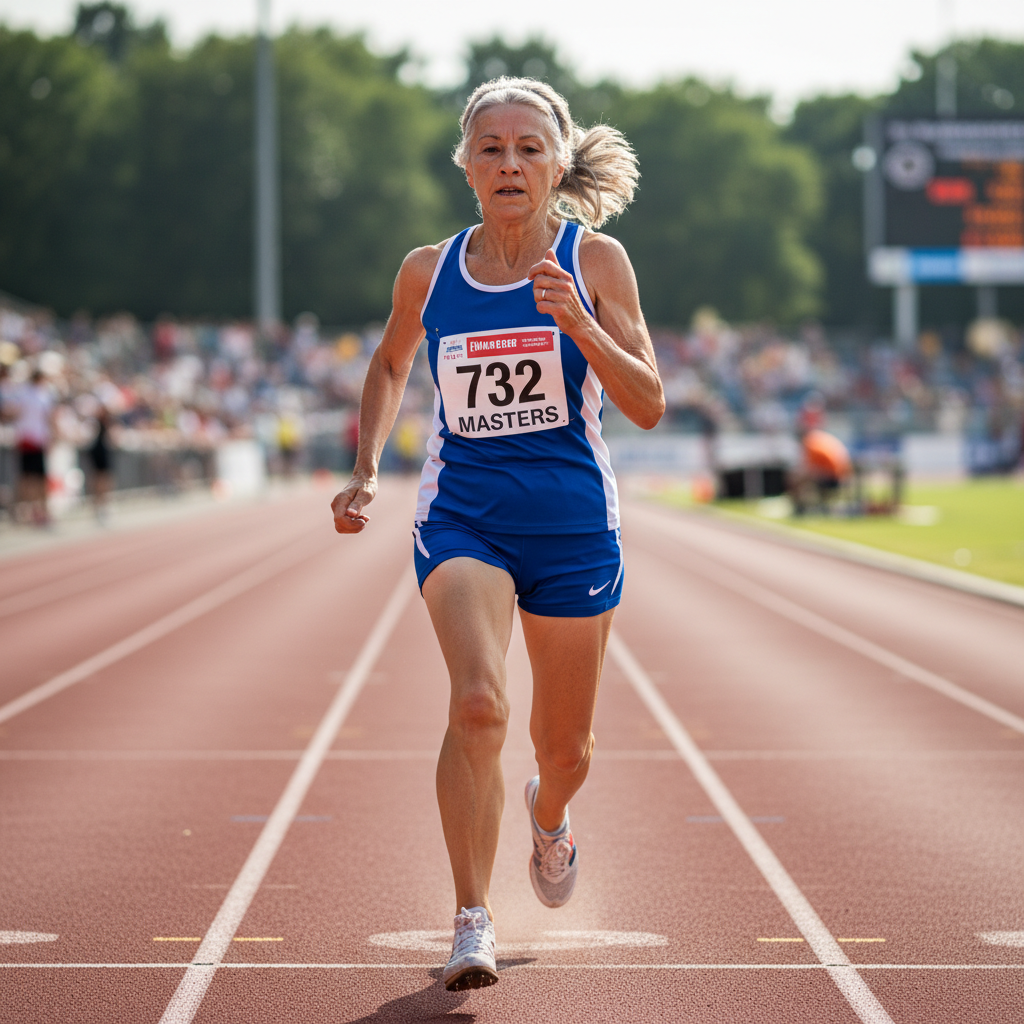
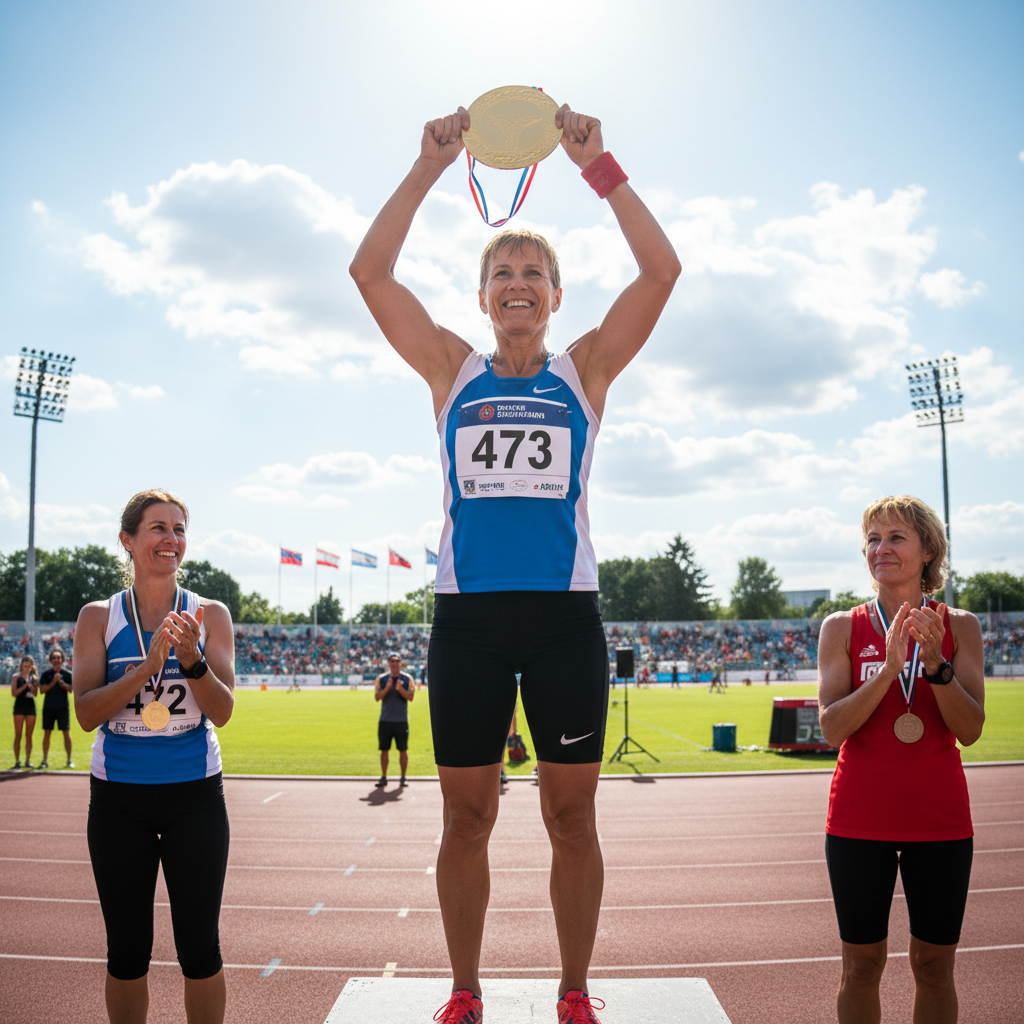
Everyone told me to just specialize. Pick three events and do those. But the whole point of the decathlon is the whole decathlon. I kept all ten and set an age-graded PR at 47. The javelin is actually getting better every year.
THE
RETURN
Competition results. PR timelines. The athletes who came through the abyss and found the other side.

CHALK DUST
ON YOUR HANDS
The spikes are already laced. Eight events behind you and the hardest two still ahead. The only question is whether your coaching can match your ambition.
Free score calculator · No commitment required · Coach responds within 24h